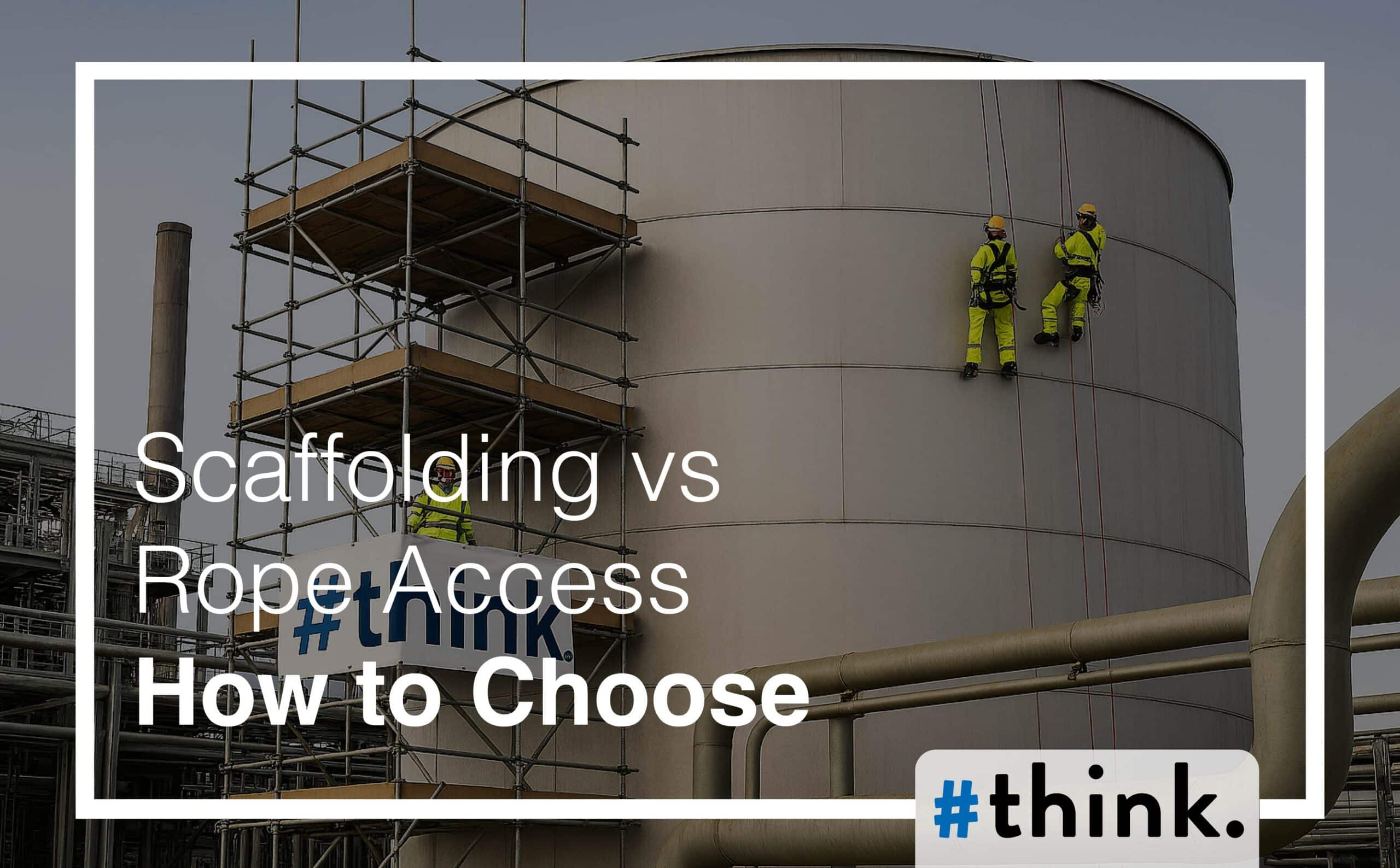
Scaffolding vs Rope Access: How to Choose the Right Solution for Your Project
Introduction: Two Great Options, One Right Answer
Every project that involves working at height reaches the same fork in the road: do you bring in scaffolding or use rope access? It is one of the most practical decisions a project manager or facilities professional will face, and getting it right can save significant time, money and disruption.
At Think Access Group, we sit in a unique position. Our rope access division, Think Access, delivers IRATA-certified working at height solutions across the UK. Our scaffolding division, Think Industrial Services, brings traditional access expertise to complex construction and maintenance projects. Because both services sit under the same roof, we have no interest in pushing you towards one over the other. We work with our clients to understand the project, the site and the programme before recommending the right solution.
This article sets out an honest comparison of both methods so you can approach that decision with confidence.
Working at height: method usage across UK industry
Proportion of projects by primary access method
Source: HSE Working at Height statistics and industry estimates. Rope access share reflects specialist high-risk environments and growing adoption across commercial sectors.
What Is Rope Access?
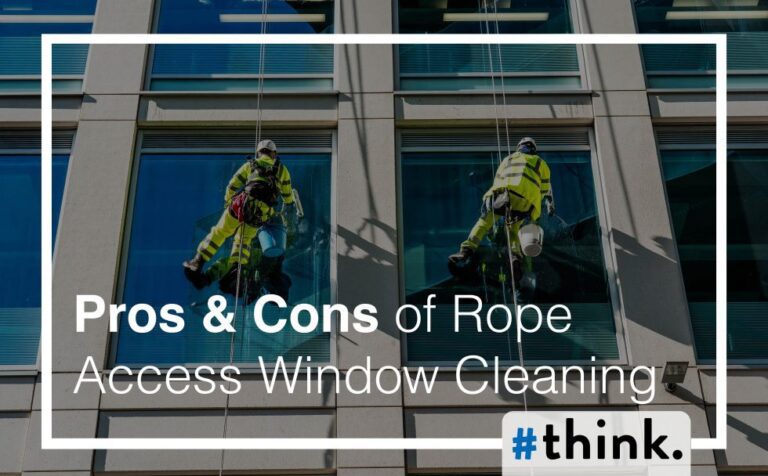
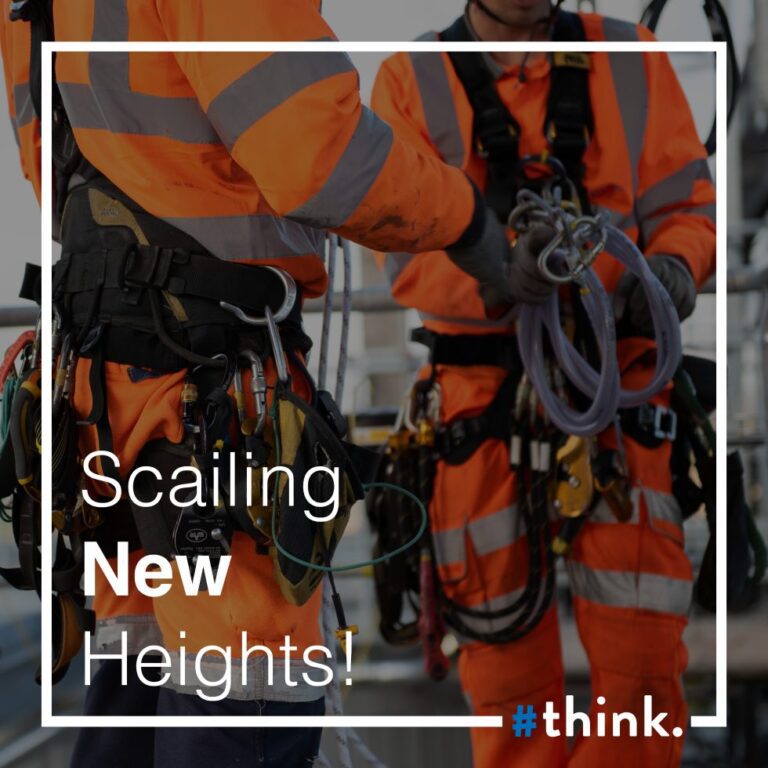
Rope access is a technique in which trained technicians use a system of ropes, harnesses and rigging equipment to access difficult or elevated areas without the need for scaffolding or elevated work platforms. Technicians work from two ropes simultaneously: a working line and a separate safety line.
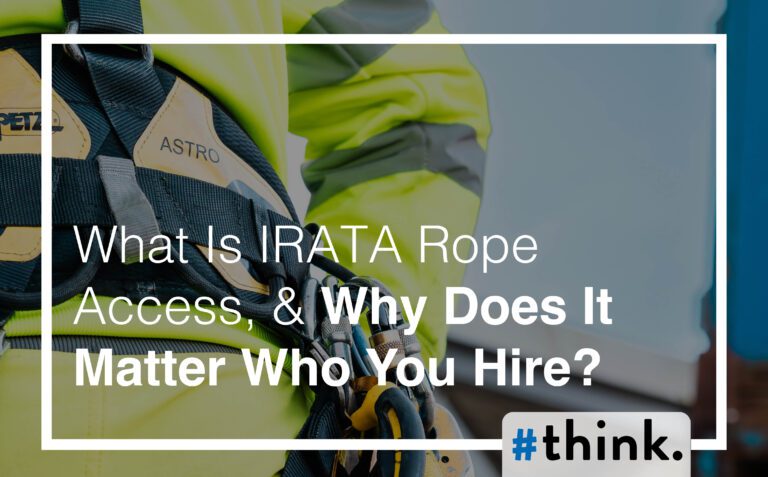
The International Rope Access Trade Association (IRATA) sets the global standard for rope access training and certification. IRATA-certified technicians complete a tiered qualification system across three levels, with Level 3 operatives qualified to supervise and manage rope access operations. According to IRATA’s own industry statistics, rope access consistently records one of the lowest accident rates of any working at height method, making it not just a cost-effective choice but a genuinely safe one.
Lost-time incident rate by working at height method
Incidents per 1,000 workers — source: IRATA Annual Statistics Report
Source: IRATA International Annual Statistics Report. Rates are indicative and based on published industry data for comparison purposes.
What Is Scaffolding?
Scaffolding involves the erection of a temporary structure, typically using steel tubes and boards, to provide a working platform at height. It has been the traditional method of access for construction, maintenance and refurbishment projects for decades.
Scaffolding is regulated in the UK under the Work at Height Regulations 2005, which require that all work at height is properly planned, supervised and carried out by competent persons. Scaffolding contractors operating under accreditation schemes such as CHAS and Constructionline Gold demonstrate a commitment to health, safety and quality that clients can rely on.
The Case for Rope Access
Speed of Mobilisation
Rope access teams can mobilise quickly. Where a scaffolding structure might take days or weeks to design, procure and erect, a rope access team can often be on site and working within 24 to 48 hours. For reactive maintenance, emergency inspections or time-critical programmes, that speed is a genuine advantage.
Cost Efficiency
Because rope access removes the need for materials, scaffolding erection and strike, it typically costs less for jobs that are short in duration or limited in scope. Projects involving inspection, localised repair, painting or installation of individual components can often be delivered at a fraction of the cost of a comparable scaffolding solution.
Access to Difficult Areas
Rope access excels where traditional access is simply not practical. Chimney stacks, bridge undersides, wind turbines, coastal structures and complex industrial facilities all present challenges that scaffolding cannot always solve efficiently. Rope access technicians can reach areas that would require enormous scaffold structures and still complete the work safely.
Minimal Disruption
A rope access team requires very little ground space and creates minimal disruption to the surrounding environment or ongoing operations. For occupied buildings, live industrial sites or locations with restricted footprints, this is a significant benefit.
Environmental Footprint
Rope access generates no materials waste from scaffold tube, boards or fittings. For clients with environmental targets or sustainability commitments, this is worth factoring into the decision.
Average mobilisation speed: rope access vs scaffolding
Time from instruction to operatives on site
Source: Industry averages. Actual mobilisation time varies by project complexity and size.
Indicative cost comparison by project type
Rope access vs scaffolding across common project categories
Indicative cost ranges only. Actual costs vary by site, programme and specification. Data for illustration purposes.
The Challenges of Rope Access
Not all companies advertising rope access services operate under IRATA standards. Rope access is not the right answer for every project. Where large areas of work need to be carried out simultaneously, it can be slower than a full scaffold platform that allows multiple operatives to work across a wide face at the same time.
Certain types of work, including heavy structural installation or large volume brickwork, are simply better suited to a solid working platform. There are also weather limitations: high winds can restrict rope access operations in ways that would not affect a scaffold structure.
Rope access also places a premium on highly trained personnel. IRATA certification requires ongoing training, reassessment and a commitment to safe systems of work. Projects that require large numbers of operatives may face practical constraints on mobilising a fully certified rope access team at short notice.
The Case for Scaffolding
A Stable, Consistent Working Platform
For projects that involve sustained, large-scale work across a wide area, scaffolding provides something rope access cannot: a permanent, stable platform from which multiple trades can work simultaneously. Bricklayers, joiners, roofers and mechanical engineers can all work from the same structure, making scaffolding the backbone of most major construction and refurbishment programmes.
Suitability for Heavy Loads
Scaffolding can support the movement of heavy materials, plant and equipment in a way that rope access cannot. If your project involves lifting and positioning heavy components, installing structural steelwork or carrying large quantities of materials to height, scaffolding is typically the appropriate choice.
Familiarity Across the Supply Chain
The wider construction supply chain understands scaffolding. Designers, surveyors, project managers and subcontractors are all accustomed to working around temporary scaffold structures. This familiarity reduces coordination friction on complex, multi-trade projects.
Extended Duration Works
For projects that run over many weeks or months, a scaffold structure provides continuity. Trades can come and go without needing to re-mobilise access equipment each time. The platform remains in place throughout the programme, providing consistent access across the whole site.
The Challenges of Scaffolding
Scaffolding carries higher upfront costs and requires time to design, erect and eventually strike. In built-up urban areas, scaffolding may require road closures, highway licences or neighbour notifications, all of which add time and cost to a programme. For small, targeted works where only one or two elements need attention, the cost of a full scaffold solution can be disproportionate to the task.
Scaffold structures also require ongoing inspection in line with the Work at Height Regulations 2005. Weekly inspections and post-bad-weather checks must be carried out by a competent person and recorded accordingly. This is entirely manageable but adds an ongoing compliance overhead to the project.
How Think Access Group Approaches the Decision
Because Think Access Group operates both services through separate specialist divisions, we approach access methodology from the client’s perspective rather than from a commercial bias towards one solution.
When a client brings us a project, we look at the whole picture. What is the scope? How long will the works take? What is the site environment? Are there access constraints, live operations nearby, or environmental considerations? What does the programme look like, and how many operatives need to work simultaneously?
Sometimes the answer is clearly rope access. Sometimes it is clearly scaffolding. And sometimes the best solution combines both: rope access to tackle difficult or isolated areas while a scaffold structure supports the primary working face.
Our clients trust us to give them an honest recommendation, and that is exactly what we do. Think Access delivers IRATA rope access works across the UK. Think Industrial Services delivers scaffolding solutions to the same standard of quality and compliance. Both divisions hold recognised industry accreditations and operate under rigorous health and safety frameworks. We genuinely want to engage with our clients early in the project process, because that is when the right access decision saves the most time and money. Whether your project sits clearly in one camp or calls for a blended approach, Talk to us before you commit to a method.
Which access method suits your project?
A factor-by-factor comparison — rope access vs scaffolding
Think Access Group covers both methods through Think Access (rope access) and Think Industrial Services (scaffolding). We recommend the right solution for your project without bias towards either service.
Sources & Further Reading
The following sources informed this article: