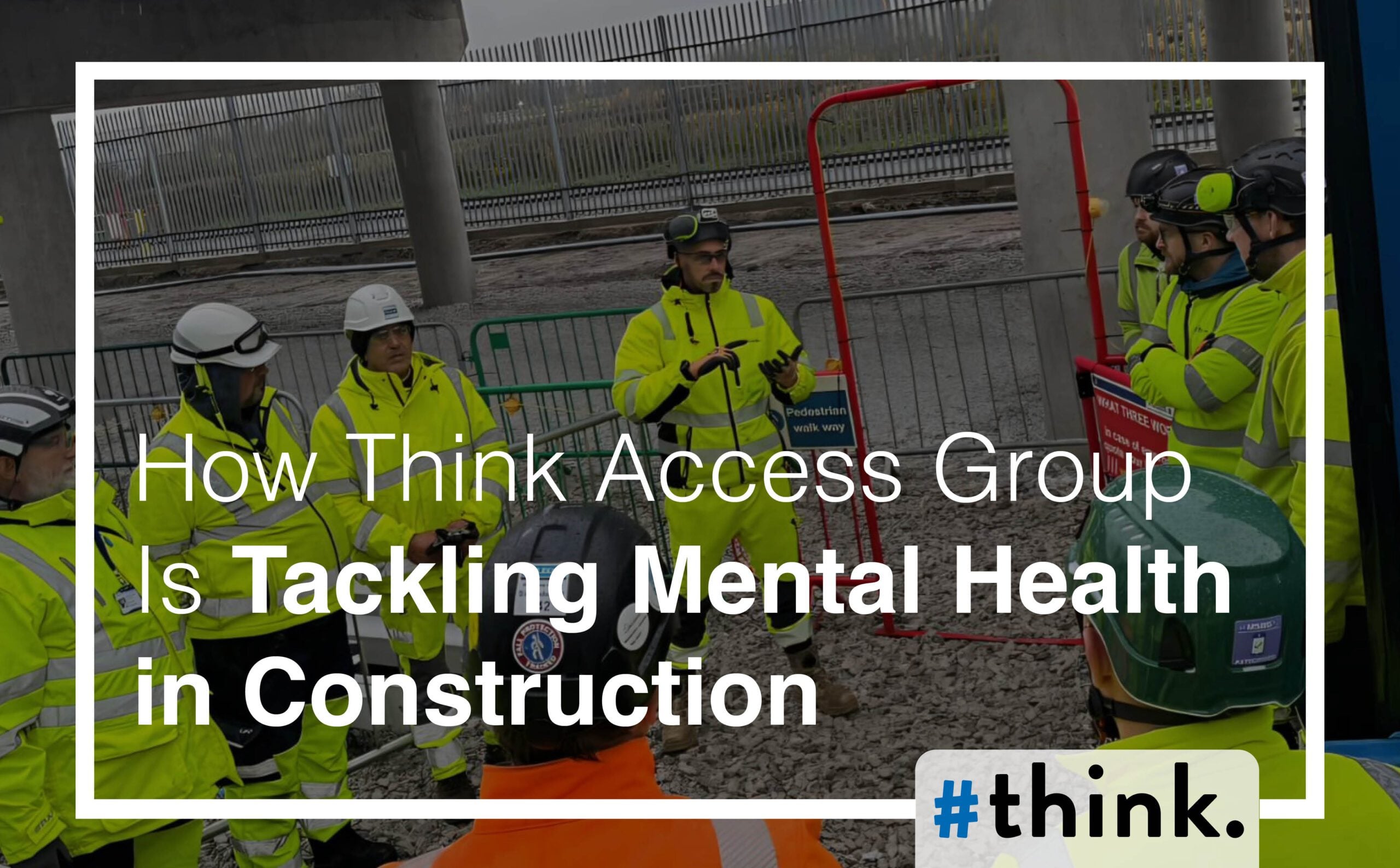
Building a Healthier Industry: How Think Access Group Is Tackling Mental Health in Construction
The construction industry builds the world around us bridges, buildings, infrastructure, homes. But behind the hard hats and high-vis jackets, there is a quiet crisis that rarely makes it onto the safety agenda: mental health. In the UK, construction workers are three times more likely to die by suicide than from a workplace accident. Yet for decades, the culture of the industry has made it one of the hardest places to talk openly about how you’re feeling.
Think Access Group recognised this challenge head-on and one person in particular decided to do something about it.
Recognising the Problem
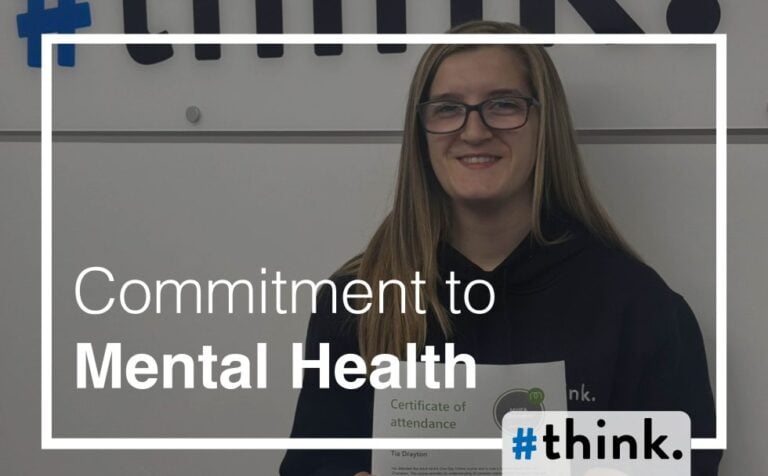
Tia Drayton, working within what remains a heavily male-dominated sector, identified early on that the very nature of the construction workforce created a significant risk for unaddressed mental health issues. Long hours, physical demands, job insecurity and working away from home all contribute to stress, anxiety and isolation, pressures that many workers quietly carry without ever seeking help.
The numbers back up her instincts. According to Mates in Mind, a charity dedicated to mental health in construction, the industry has one of the highest rates of poor mental health of any sector in the UK. Depression and anxiety are common, yet vastly underreported partly due to stigma and partly due to a lack of visible & accessible support.
Taking the First Step: Becoming a Mental Health First Aider
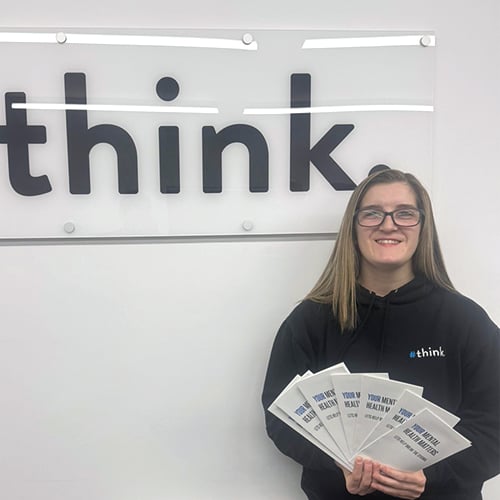
Tia’s response was practical and personal. She trained as a Mental Health First Aider (MHFA) gaining the skills to recognise the signs of mental health struggles, hold supportive conversations and signpost colleagues to the right help. Just as a physical first aider is trained to respond to a bleeding wound or a broken bone, a mental health first aider is equipped to respond when someone is struggling emotionally or psychologically.
But Tia also recognised a very real barrier: as a younger woman working in a male-dominated environment, some colleagues might not feel entirely comfortable opening up to her directly. Rather than seeing this as a reason to stop, she used it as a reason to think creatively.
Meeting People Where They Are: The Mental Health Leaflet
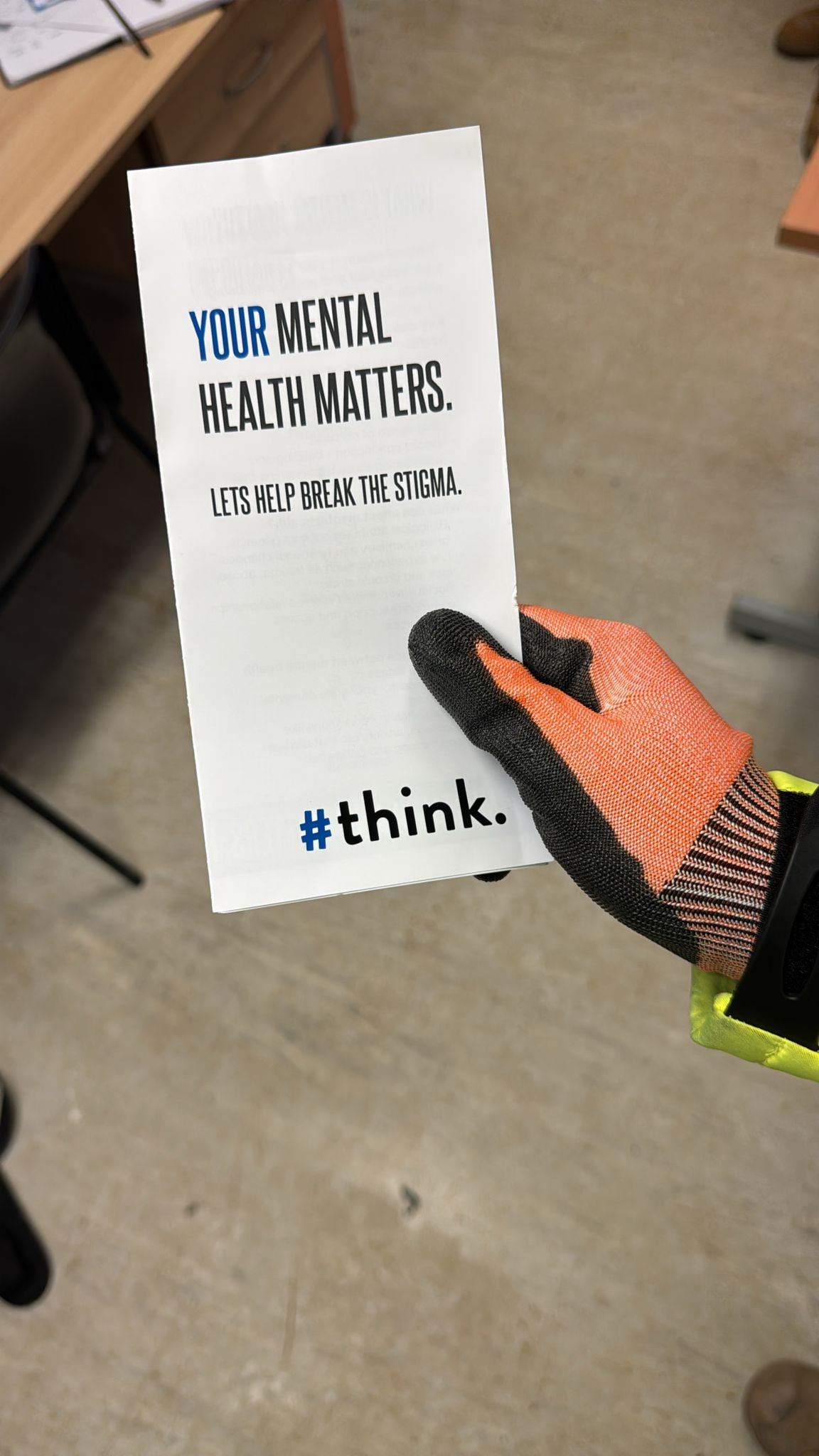
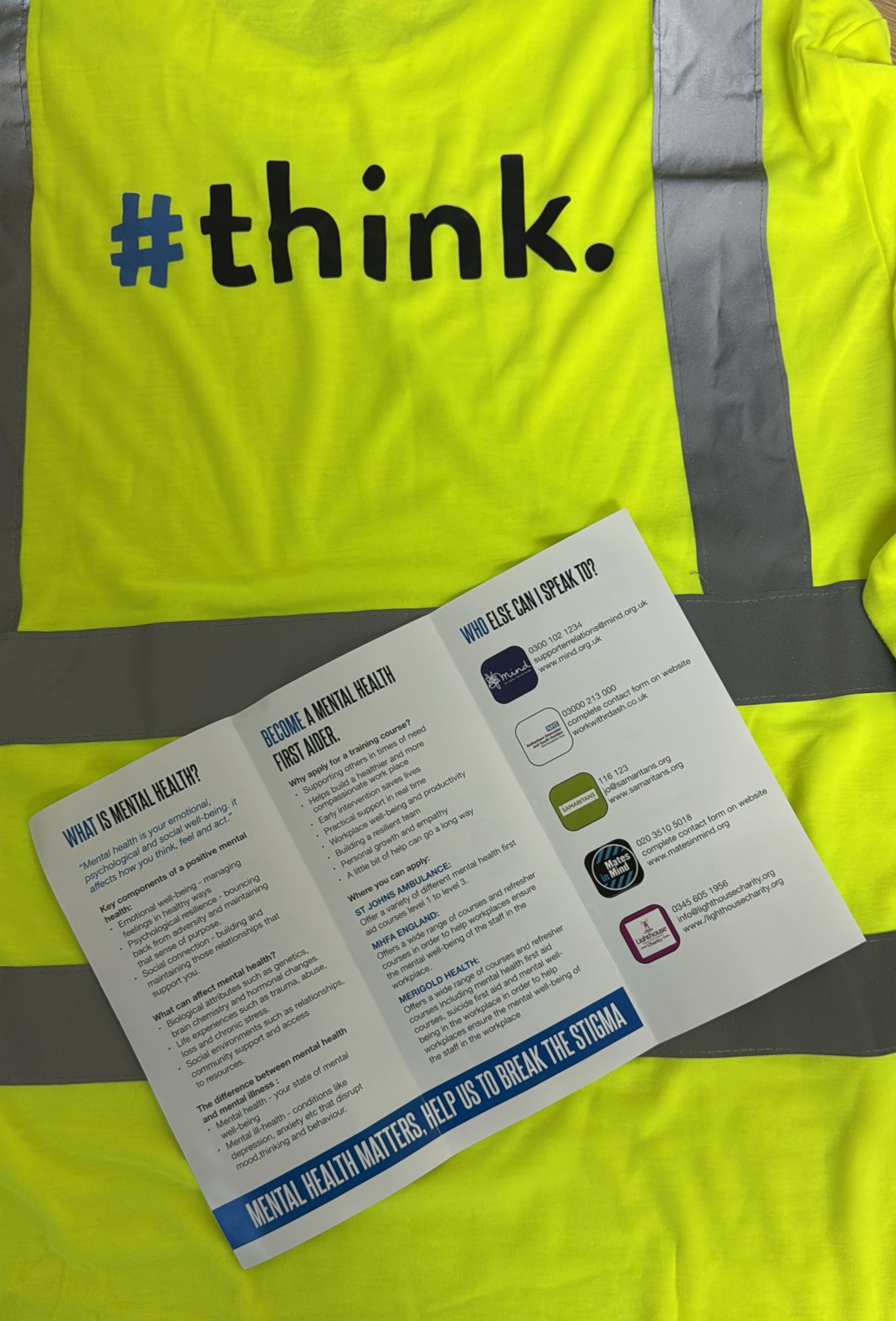
Tia developed a dedicated mental health leaflet, specifically designed to reach workers who might not take the first step in asking for help. The leaflet covered the essentials in plain, accessible language: what mental health actually means, why getting support is so important, and the very real impact that untreated mental health struggles can have on individuals, families and safety on site.
Crucially, it also encouraged others to consider becoming Mental Health First Aiders themselves because the more people trained and confident in these conversations, the stronger the safety net for everyone. And it introduced Tia as a direct point of contact: a reassuring, no-pressure option for anyone who simply needed a chat, with full details on how to reach her.
The leaflet also included a range of external support services from Mind (0300 102 1234) and Samaritans (116 123), to industry-specific organisations like Mates in Mind and the Lighthouse Construction Industry Charity, giving workers multiple routes to support, anonymously if they preferred.
The leaflet was printed and distributed to all staff members across Think Access Group’s multiple sites and offices, putting vital information into the hands of every employee not just those who might already feel confident enough to seek it out.
Taking It to the Ground: The Toolbox Talk
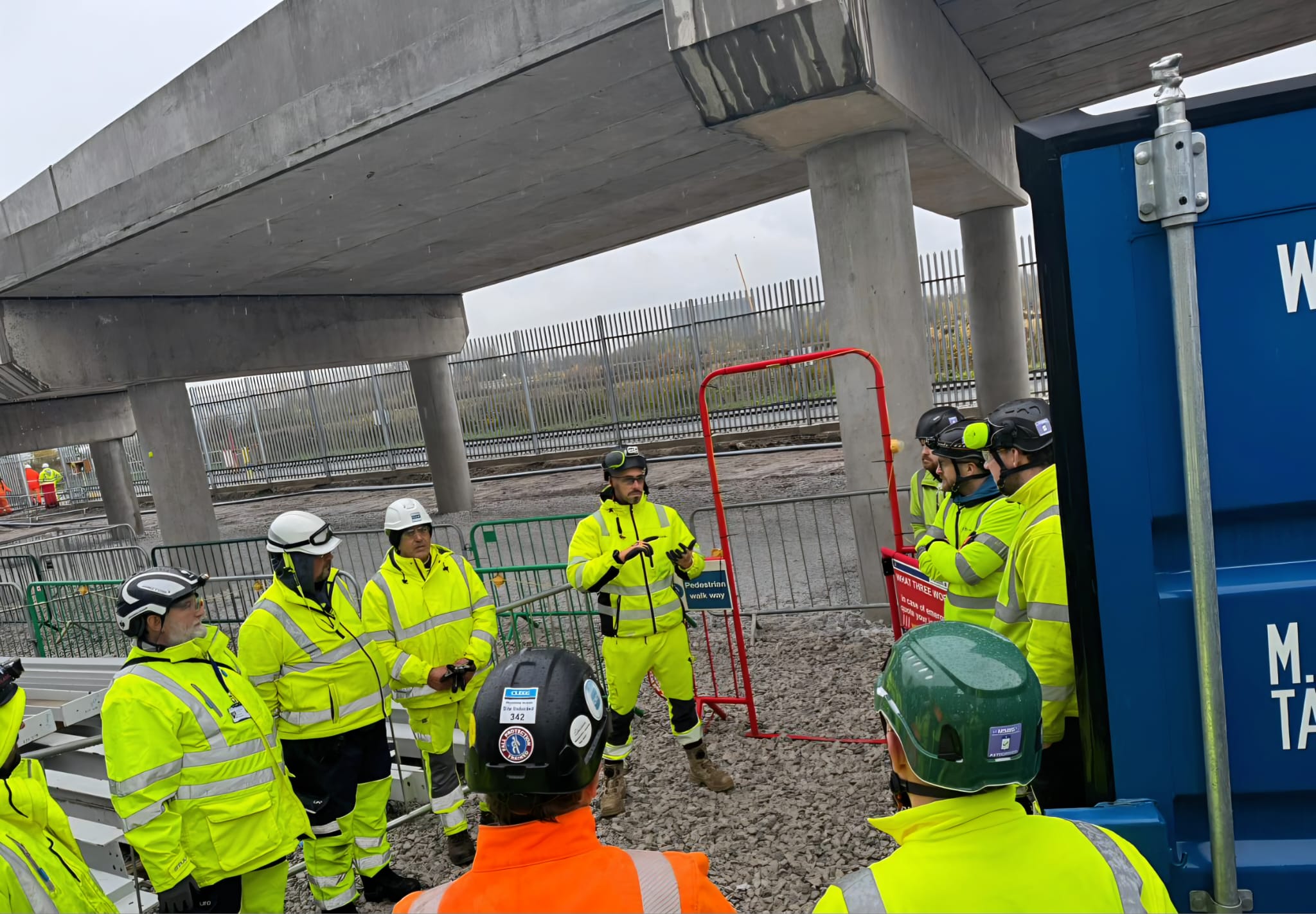
Leaflets are a start but embedding cultural change requires consistent, visible conversation. Think Access Group took their mental health initiative a step further with a formal Toolbox Talk on Mental Health Awareness, delivered to all site staff.
Toolbox Talks are a familiar format in construction short, focused briefings delivered on site that address specific health and safety topics. By placing mental health within this well-understood framework, the message was clear: this is not a soft issue or an optional extra. Mental health is a safety issue, every bit as important as working at height or manual handling.
The talk covered four key areas: what mental health actually is and why it matters on site; the warning signs to look out for in yourself and in colleagues; practical actions anyone can take talk, listen and support; and the resources available both internally and externally. Critically, staff didn’t just listen and walk away. Completion was recorded and signed off through the GetKonnected app, ensuring accountability and creating a verifiable record of engagement. The information was also stored electronically within the app, so that anyone who needed to revisit the content or access the support details in a moment of need could do so easily, privately and at any time.
Why This Matters and What the Industry Can Learn
What Think Access Group has done is straightforward in its design but significant in its impact. Rather than treating mental health as somebody else’s problem, they’ve made it a visible, company-wide priority. They’ve combined training, communications, peer support, and technology — not as a tick-box exercise, but as a genuine attempt to create a safer, more human workplace.
For the wider construction industry, this approach offers a practical blueprint. You don’t need an unlimited budget or a dedicated HR department. You need someone willing to take the first step, like Tia did — to get trained, to create resources, to have the conversation. And then to make sure that conversation reaches every worker, in a format they can understand and access.
Mental health provision in construction is improving, but there is still a long way to go. More companies training Mental Health First Aiders. More toolbox talks that treat wellbeing as a site safety essential. More leaflets in more hands. More people knowing that it is okay — and safe — to ask for help.modern, reliable and safe method of delivery without the limitations of traditional access systems.