Location: Brentford Docks Marina, West London
Scope of Work: Visual inspection, preparation and concrete repair of a failed over-water repair section; application of protective coating system to match existing finish.
Team Deployment: 3 IRATA-qualified rope access technicians.
Access Method: IRATA-compliant rope access, weight trolley anchor system rigged and rescue provisions set specific to the over-water work zone.
Overview:
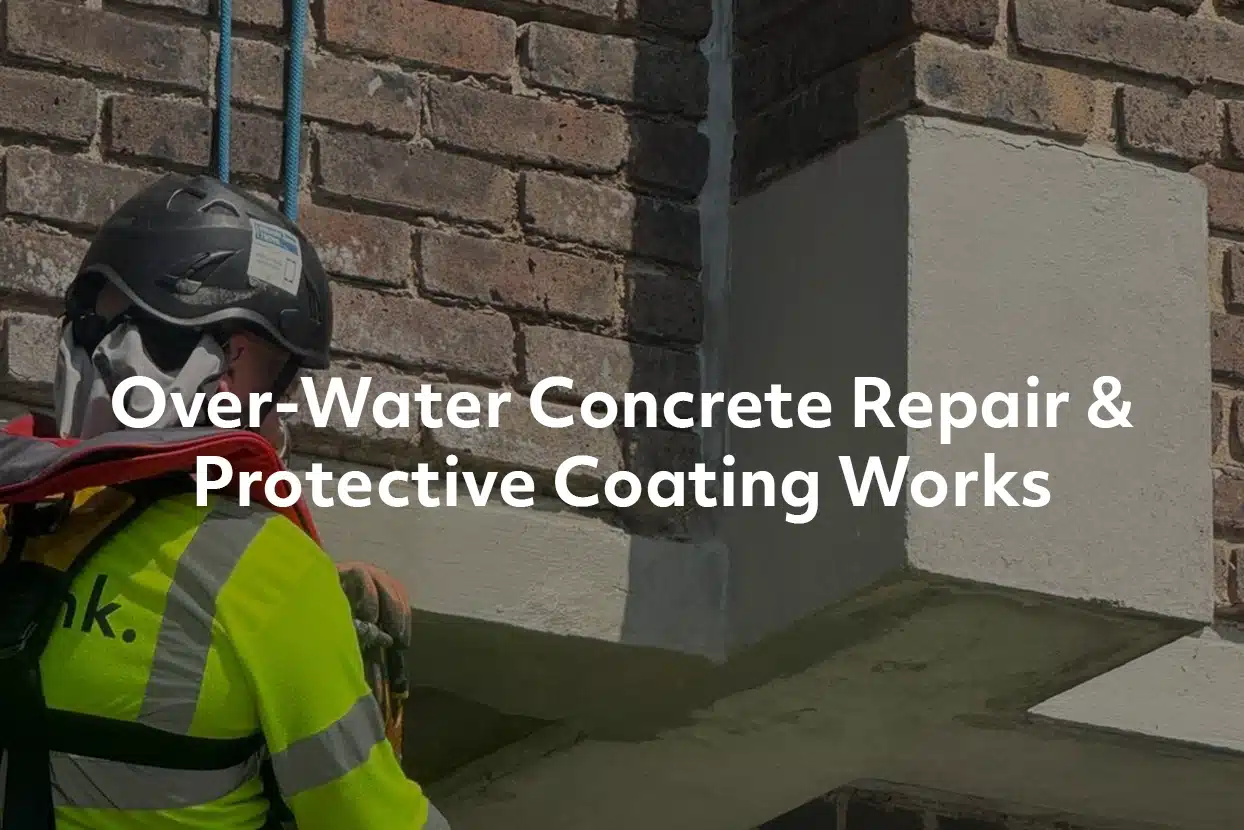
A structural contractor required rope access support to carry out concrete repair and protective coating works to a waterside masonry structure at a marina in West London. With the repair area located in a low-level, over-water zone with no viable platform access, rope access provided the safest and most efficient solution, eliminating the need for scaffolding or MEWPs entirely.
The Challenge:
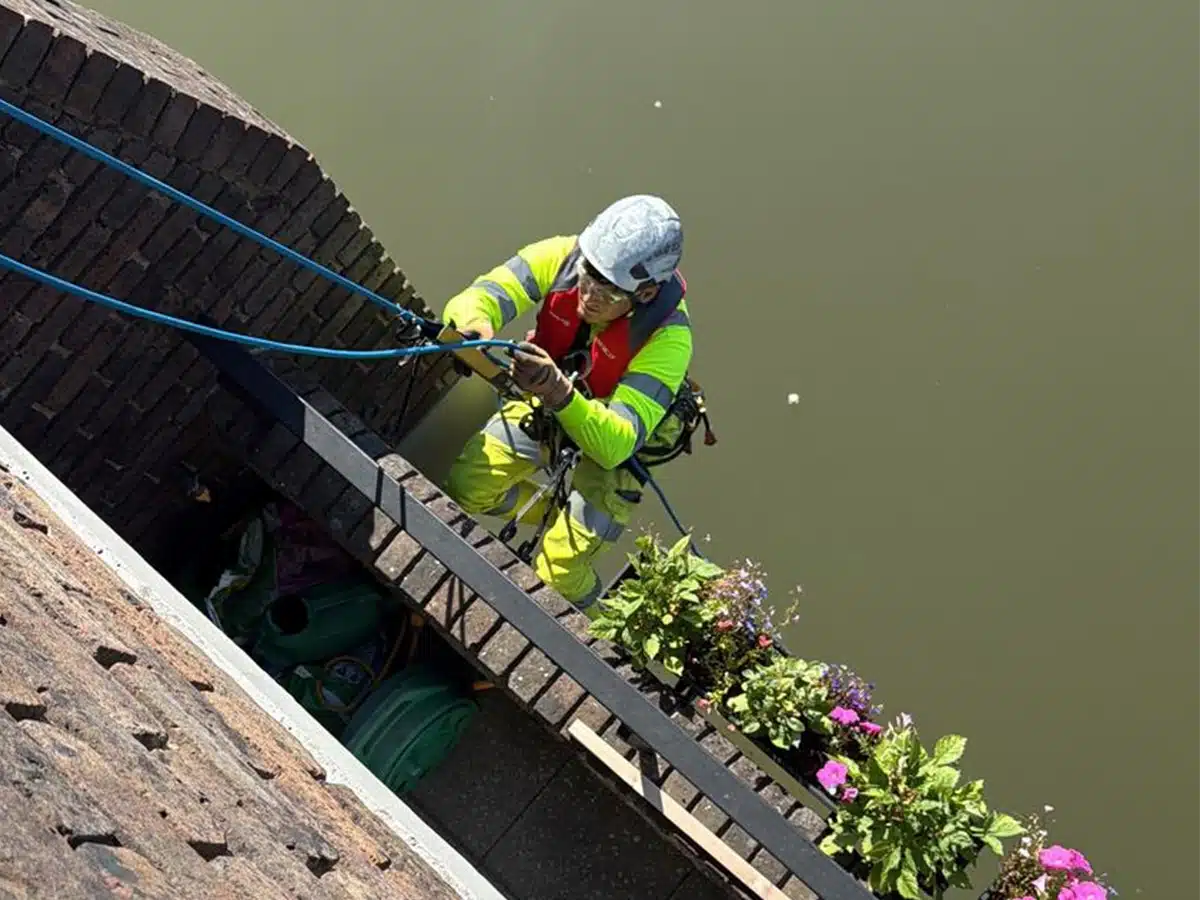
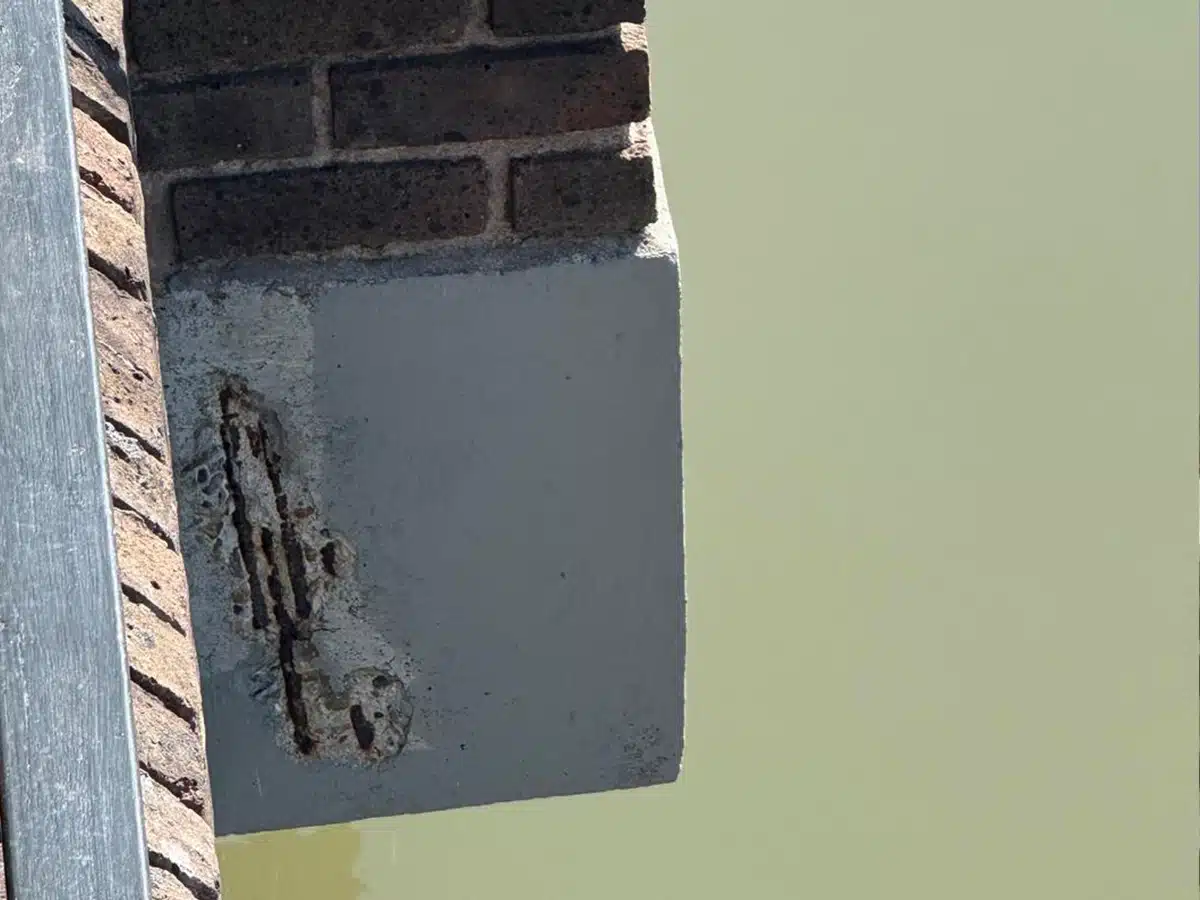
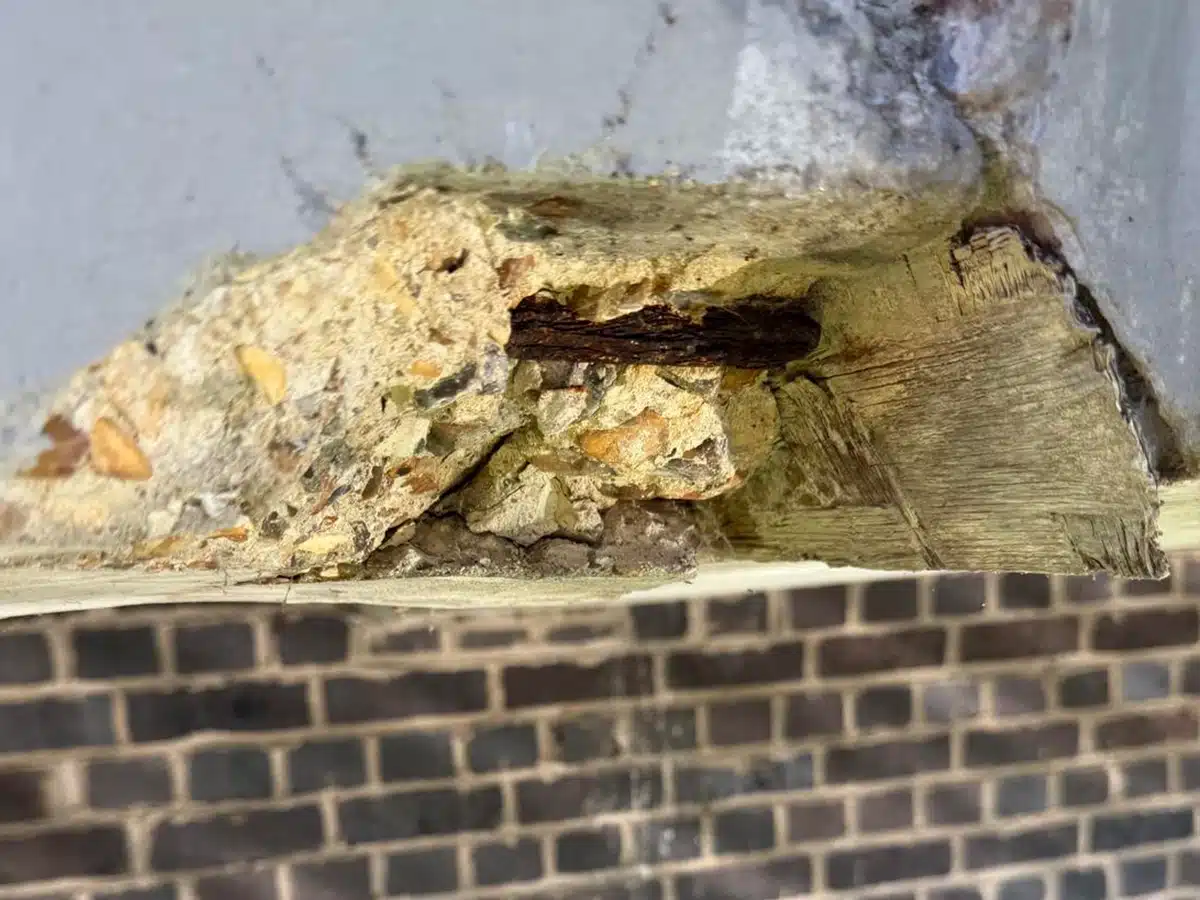
The affected section was a failed previous concrete repair on the waterside elevation of a marina building, positioned directly over open water and accessible only from above. The repair area was in a low-level zone requiring operatives to be suspended at close range to carry out precision substrate preparation and mortar application, making rope access the only practical method.
The works presented a number of specific challenges:
- All debris and waste material had to be collected directly at the work point to prevent any risk of contamination to the waterway below, using tool bags and containment controls throughout.
- The entire work zone was positioned directly above open water, requiring a full water rescue protocol in line with IRATA ICOP Annex S, including a manned inflatable rescue tender positioned within 10 metres of the working area throughout.
- During the first days operations, a second area of failed concrete was identified on site. The team repositioned ropes and the weight trolley anchor system to treat both zones within the same working day, with no additional mobilisation required.
- The repair mortar required overnight curing before the protective coating system could be applied, requiring the programme to be structured across two days to allow for full cure before primer and top coat application.
The Solution:
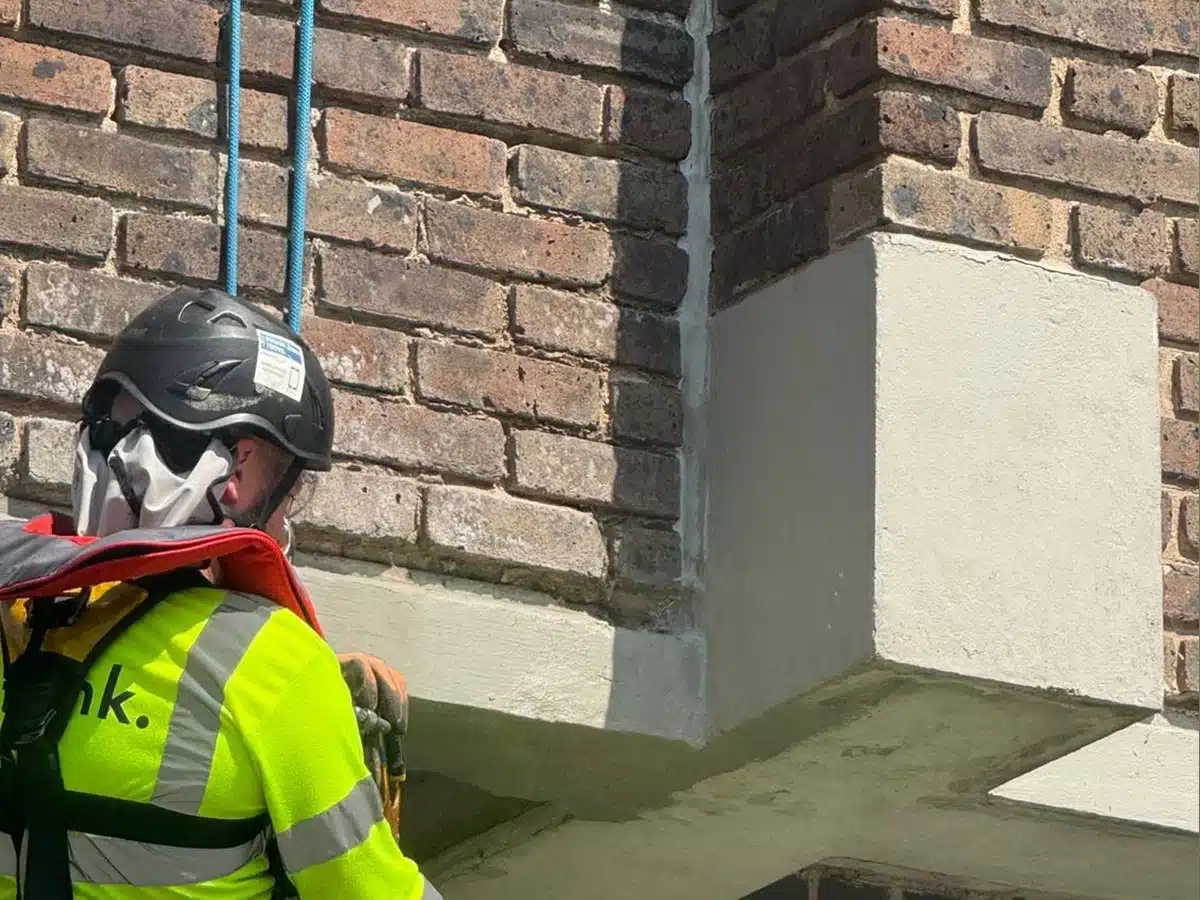
Think Access deployed a three-person IRATA-qualified rope access team, supervised by an IRATA Level 3 technician, to carry out the full scope of works across two days.
Prior to descent, weight trolleys were positioned and secured above the work zone as the primary anchor system. Primary and secondary rope systems were installed, rigged via a Rig-for-Rescue configuration, with rope protectors, stopper knots and backups in place. The rescue boat was deployed, the full rescue plan was briefed to the team and documented, and the Level 3 Supervisor signed off the system and confirmed readiness with the water rescue team before any operative descended.
On Day 1, operatives descended via rope access to carry out a visual inspection of the failed repair section, photographically recording all areas requiring intervention. Loose and delaminating concrete was removed using hand tools, and the substrate was cleaned with wire brushing to remove laitance, dust and contamination. Support bolts were drilled into the substrate before slurry and repair mortar (Sika MonoTop 615) were applied to the first zone. Ropes and the weight trolley anchor system were then repositioned to treat the second identified area. Both zones were smoothed with a grout sponge and left overnight to cure.
On Day 2, the team re-rigged and returned to the first zone, applying primer (Sika MonoTop 1010), allowing it to set, then applying the protective top coat (Sikagard 675W). The team then moved to the main repair area where, due to the larger area, an additional mortar mix was required to achieve the correct profile. Once set in warm conditions, primer and protective coating were applied to match the existing system. Operatives wore self-inflating Pilot 165N life jackets over their rope access harnesses at all times when over water. Radio contact checks were conducted between the rope access team, the Level 3 Supervisor, and the water rescue team throughout. All tools used at height were tethered in accordance with the project SSOW. Client sign-off was obtained at the end of each day, with all activity logged digitally via the Get Konnected platform, providing real-time visibility of operatives, equipment and progress.
Results:
The project was delivered in full, with both concrete repair zones completed and coated to a high-quality finish within the two-day programme. Key outcomes included:
- Both over-water concrete repair zones inspected, prepared, repaired and coated within the two-day programme, as quoted.
- Protective coating system matched to the existing finish, providing long-term durability against a waterside environment.
- Second repair zone identified and treated on Day 1 with no additional mobilisation required.
- Zero safety incidents throughout. Water rescue provision maintained without incident for the full duration of works.
- Daily client representative sign-off obtained via the Get Konnected platform, providing a fully auditable record of all site activity.
- All waste material contained and removed from site, no debris entered the waterway.
- All workmanship warranted for twelve months from the date of completion, in line with Think Access Group terms and conditions.
The project was delivered on a fixed-price basis and signed off by the client representative on completion, with full manager verification completed through Think Access’s internal quality process.
Ready to Deliver Your Next Rope Access Project?
Whether over water, at height or in a restricted waterside environment, our IRATA-qualified rope access teams are ready to deliver safely, on programme and with full documentation. If you have concrete repair, protective coating works or access challenges in hard-to-reach areas, get in touch today for a no-obligation consultation.