Thermal Imaging and Tracer Dye Testing via Rope Access.
Think Access uses thermal imaging cameras and tracer dye testing to locate leak sources in building envelopes, drainage systems and waterproofing elements using IRATA rope access. We identify leak paths accurately before remedial works begin, eliminating trial-and-error repairs.
Scope at a glance
The problem
Hidden leak paths · Water travels far · Damp patch is not the source · Pre-repair diagnosis
Methods
Thermal imaging · Tracer dye testing · Rope-access surveys · Optimum-condition timing
Outcome
True entry point confirmed · Positive identification · Targeted repairs · No unnecessary disruption
What we do

The real challenge: finding the leak
Locating the source of a roof or facade leak is frequently more challenging than repairing it. Water can travel a significant distance within a roof or wall construction before appearing internally, so the visible damp patch rarely indicates the true entry point. Our diagnostic approach uses technology to find the actual leak path.

Thermal imaging
Thermal imaging detects variations in surface temperature caused by moisture within or beneath a roof or cladding system. Wet insulation or damp membrane shows characteristic thermal patterns, particularly in early-morning conditions when surface temperature gradients are greatest. We carry out thermal surveys from ropes at the optimum time and distance for maximum detection sensitivity.
Tracer dye testing
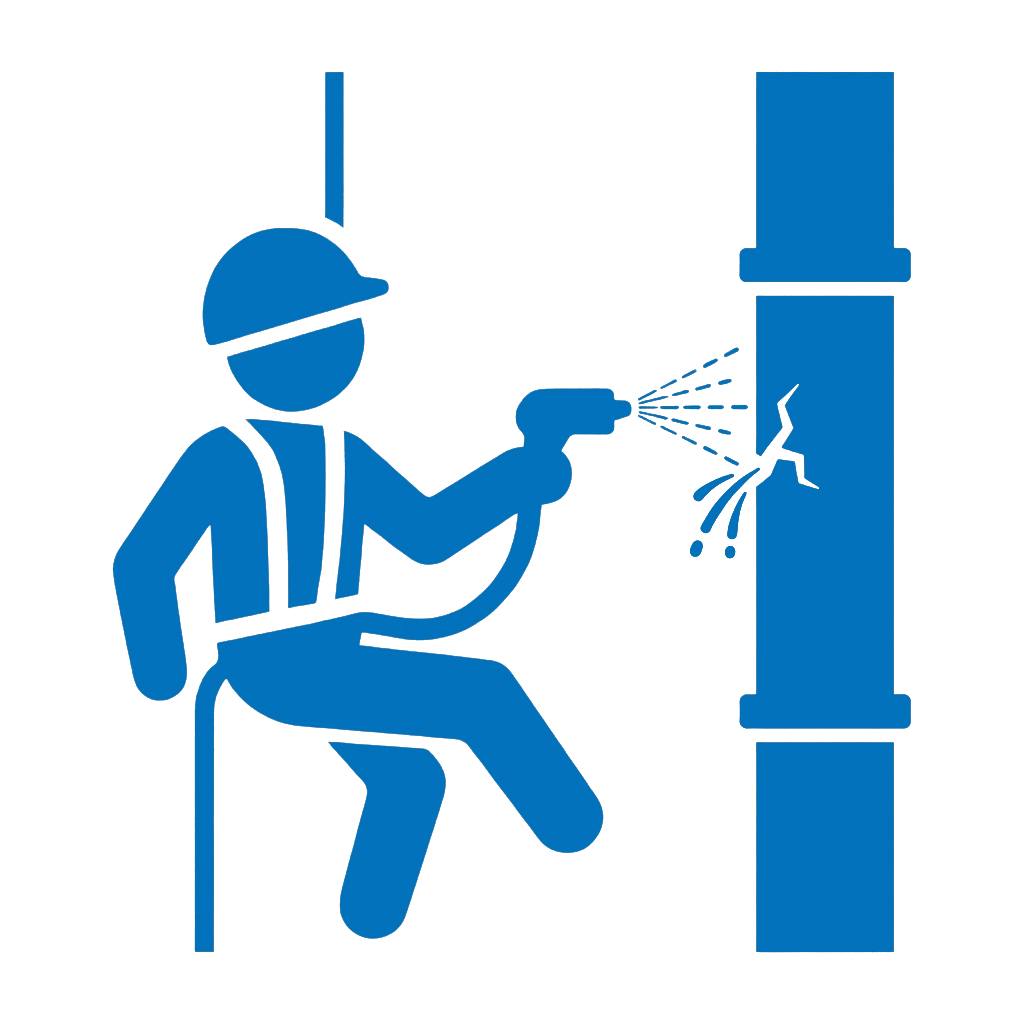
Tracer dye testing introduces fluorescent dye at suspected entry points. The test is carried out by applying water at roof level and observing where the dye appears internally, tracing the water’s path through the construction.

Why Think Access
Finding the leak before starting the repair saves time, money and frustration. Think Access combines access capability with diagnostic technology to provide a definitive answer.
F.A.Q’s

Free survey
Let’s talk about how we can help you get more from your space. Reach out today to book your free site survey, we’ll take care of the rest.
Related Services
Glazing Services
High-level glass installation, replacement and repair — delivered without scaffolding via rope access.
View serviceEdge Protection
EPF-accredited temporary edge protection systems for rooftops, platforms and live construction sites.
View serviceInspection Services
Precision fault-finding and structural inspection at height — identifying issues early with minimal disruption.
View service