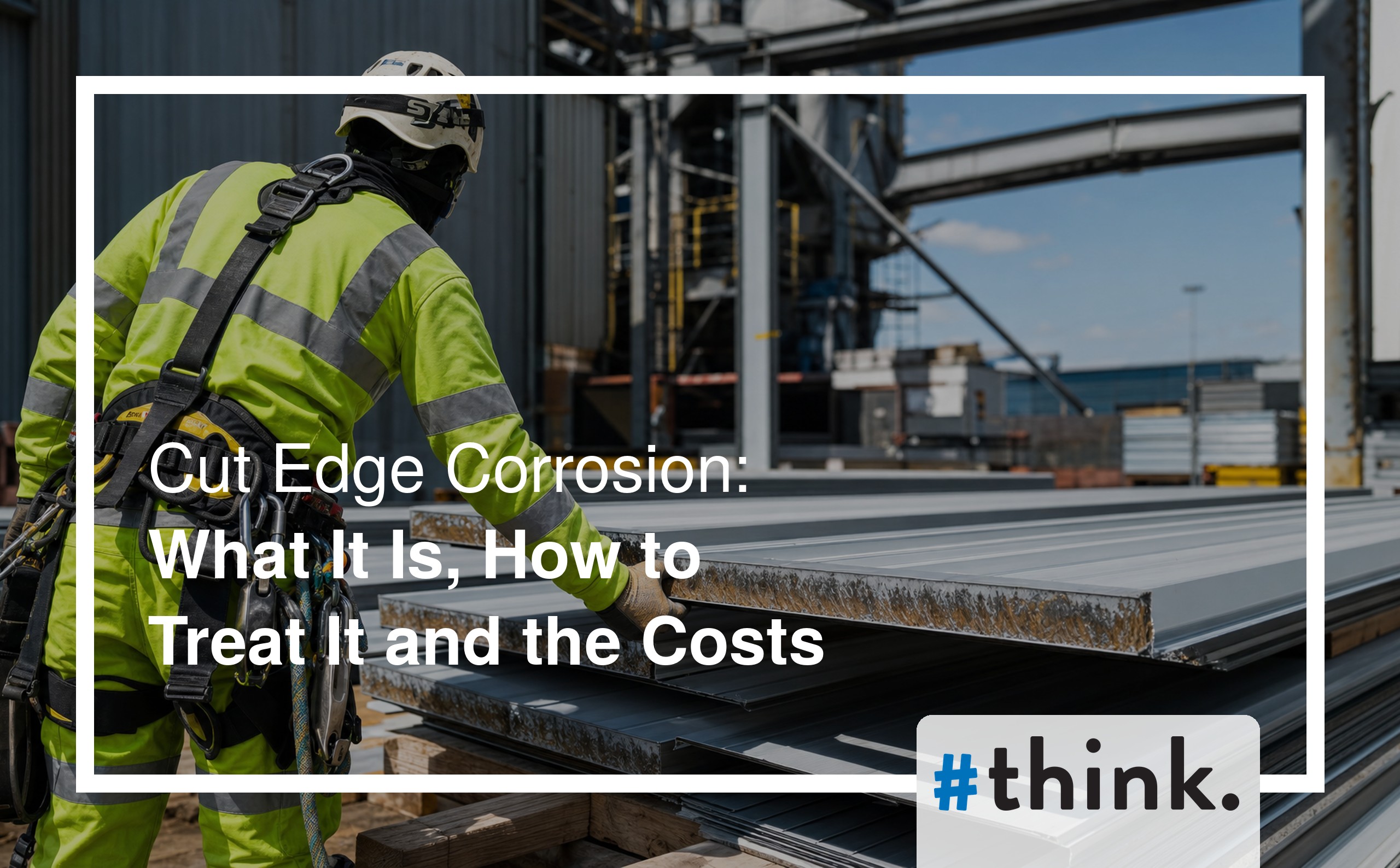
Walk the roofline of almost any profiled metal roof over fifteen years old and you will find it. A rusty brown line creeping along the cut ends of the sheets, at the eaves, the laps and around the fixings. Cut edge corrosion is one of the most common defects on industrial roofs in the UK, and the difference between catching it early and ignoring it is the difference between a coating job and a new roof. In this blog, we explain what causes it, how to judge how far it has gone and what each treatment option costs. It is bread and butter work for our roofing and cladding teams.
What Causes Cut Edge Corrosion?
Profiled steel sheets are protected by galvanised and painted coatings applied at the factory. Wherever a sheet is cut, the raw steel edge is exposed. Water sits at exactly those places, the eaves and the sheet overlaps, so the unprotected edge rusts first. The corrosion then creeps back under the coating, lifting and delaminating it as it goes. Coastal salt, industrial atmospheres and ponding water all speed it up.
How Bad Is Yours? The Three Stages
Early: staining
Rust staining along cut edges, coating still bonded. Treatable with edge preparation and a protective edge coating at modest cost.
Established: peeling
Coating lifting and delaminating back from the edge, corrosion spreading under it. Needs mechanical preparation and a full corrosion treatment system.
Advanced: perforation
Steel thinning through to holes at edges and laps. Leaks follow. Sheet ends need repair or replacement before any coating goes near it.
Treatment Options and Costs
| Treatment | What happens | When it is right | Relative cost |
|---|---|---|---|
| Edge coating system | Edges prepared, primed and sealed with a flexible corrosion barrier | Early and established corrosion caught in time | Lowest |
| Full roof coating | Edge treatment plus a complete overcoat of the roof sheets | Widespread coating breakdown across the roof | Mid range |
| Sheet end repair or replacement | Perforated sections cut out and replaced before treatment | Advanced corrosion with holes and leaks | Highest |
All three are delivered by rope access, which is what keeps the economics sensible. There is no scaffold around the building for weeks, no roof loading from towers and no disruption below. Preparation and application are carried out from the ropes by our painting and coating teams, with the roof photographed before and after.
Catch It Early: Survey First
Cut edge corrosion is a progressive defect, so the survey matters more than anything. A drone survey maps the whole roof quickly, then a rope access inspection confirms how far the corrosion has crept under the coating at the edges that matter. From there you get a staged plan: treat now, monitor or repair.
Cut Edge Corrosion FAQs
Can cut edge corrosion be stopped?
Yes, if it is treated before the steel perforates. Proper preparation and a flexible edge coating system stop the creep and typically carry long manufacturer backed guarantees.
Is it covered by my roof warranty?
Often not once the original coating guarantee has expired, which is exactly when cut edge corrosion appears. Check your cladding warranty terms and get the edges inspected before renewal negotiations.
How long does treatment last?
Recognised edge coating systems are typically guaranteed for ten years or more when applied to a properly prepared surface. Application quality is everything, which is why preparation takes most of the time on site.
My roof is already leaking at the laps. Too late?
Not too late, but act now. Leaking laps mean the corrosion is advanced. Our teams repair the affected sheet ends, treat the remaining edges and stop the roof declining into full replacement territory. Start with our leak detection service.
Add Years to Your Roof
Think Access surveys, treats and repairs cut edge corrosion on industrial and commercial roofs across the UK. A free survey tells you which stage your roof is at and exactly what it will take to stop it there.