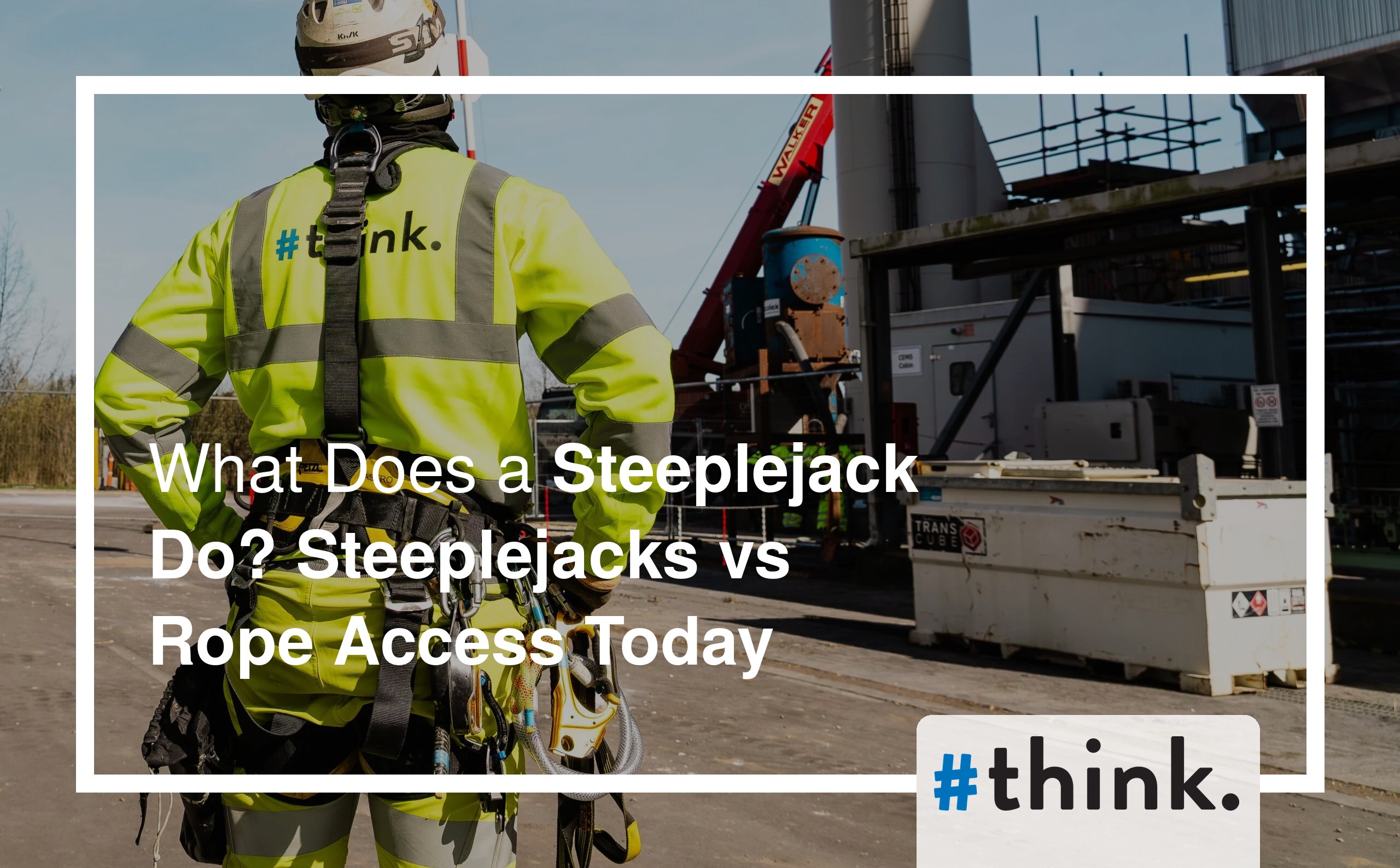
Long before harnesses and rigging plates, men climbed factory chimneys on wooden ladders they nailed to the brickwork as they went. They were steeplejacks, and for two centuries they were the only people in Britain who could work at serious height. The trade still exists, but most of its work is now done a different way. In this blog, we look at what steeplejacks actually did, why rope access largely replaced them and which method makes sense for tall structures today.
A Short History of Working at Height
1700sChurch steeples
The first steeplejacks repair spires and weathervanes using ladders lashed and nailed up the structure.
1800sThe industrial boom
Mill and factory chimneys rise across the north. Steeplejacking becomes a recognised, and famously dangerous, trade.
1900sBosun's chairs and steel
Chairs, winches and steel ladders replace timber, but the method still relies on fixing to the structure itself.
1980sRope access arrives
Techniques from climbing and caving are industrialised. IRATA forms in 1988 to set training and safety standards.
TodayRopes as standard
Twin rope systems, certified technicians and rescue capable teams handle most work once done by steeplejacks.
What Did a Steeplejack Actually Do?
Everything a tall structure needed. Repointing and rebuilding chimney crowns, fitting lightning conductors, painting flagpoles, replacing aircraft warning lamps and inspecting spires. The skill was never in question. The limitation was the method, because fixing ladders and staging to an ageing structure is slow, loads the very fabric being repaired and leaves the operative dependent on whatever they are attached to.
Steeplejack Methods vs Rope Access
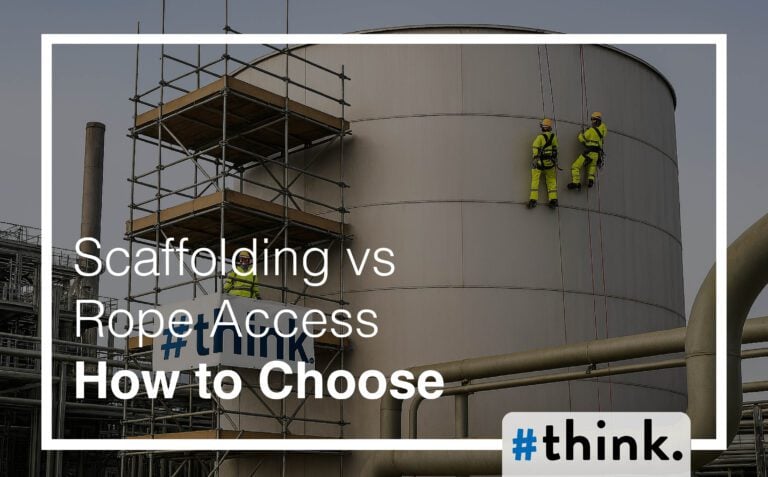
Traditional steeplejacking
- Ladders and staging fixed to the structure
- Days of rigging before work starts
- Loads old brickwork and masonry
- Slow to adapt when the job changes
- Small pool of specialist firms
Modern rope access
- Twin rope systems, nothing nailed to the fabric
- Rigged and working the same day
- Minimal loading on fragile structures
- Same team inspects, repairs and paints
- IRATA certified with rescue cover on site
None of this diminishes the old trade. Some heritage jobs still call for steeplejack staging, and the best modern firms blend both toolkits. But for inspection, maintenance, repairs and painting on chimneys, spires, flues and towers, ropes are now the default because they are faster, gentler on the structure and safer for the people doing the work.
Tall Structure Work Today
The work itself has not changed much. Industrial chimneys still need inspection and repair, towers still need painting and warning lamps still need changing. Our teams deliver it through inspection services, general maintenance and painting and coating, all by IRATA certified technicians. Our guide to using an IRATA member company explains why that certification matters.
Steeplejack FAQs
Do steeplejacks still exist?
Yes, mostly in heritage and specialist chimney work. Many firms that trade as steeplejacks now use rope access for much of their work, because the economics and safety case are hard to argue with.
Can rope access handle church spires and heritage structures?
Yes, and it is often the preferred method precisely because nothing is fixed to fragile masonry. Rigging is designed around the structure and agreed with conservation officers where required.
What about industrial chimney repairs?
Bands, crowns, linings, lightning protection and painting on industrial chimneys and flues are all reachable by rope access, with drone surveys used first where condition is unknown.
Got a Structure Everyone Else Avoids?
Chimneys, spires, towers and flues are exactly the jobs rope access was made for. Tell us what you are dealing with and we will survey it, price it and fix it.